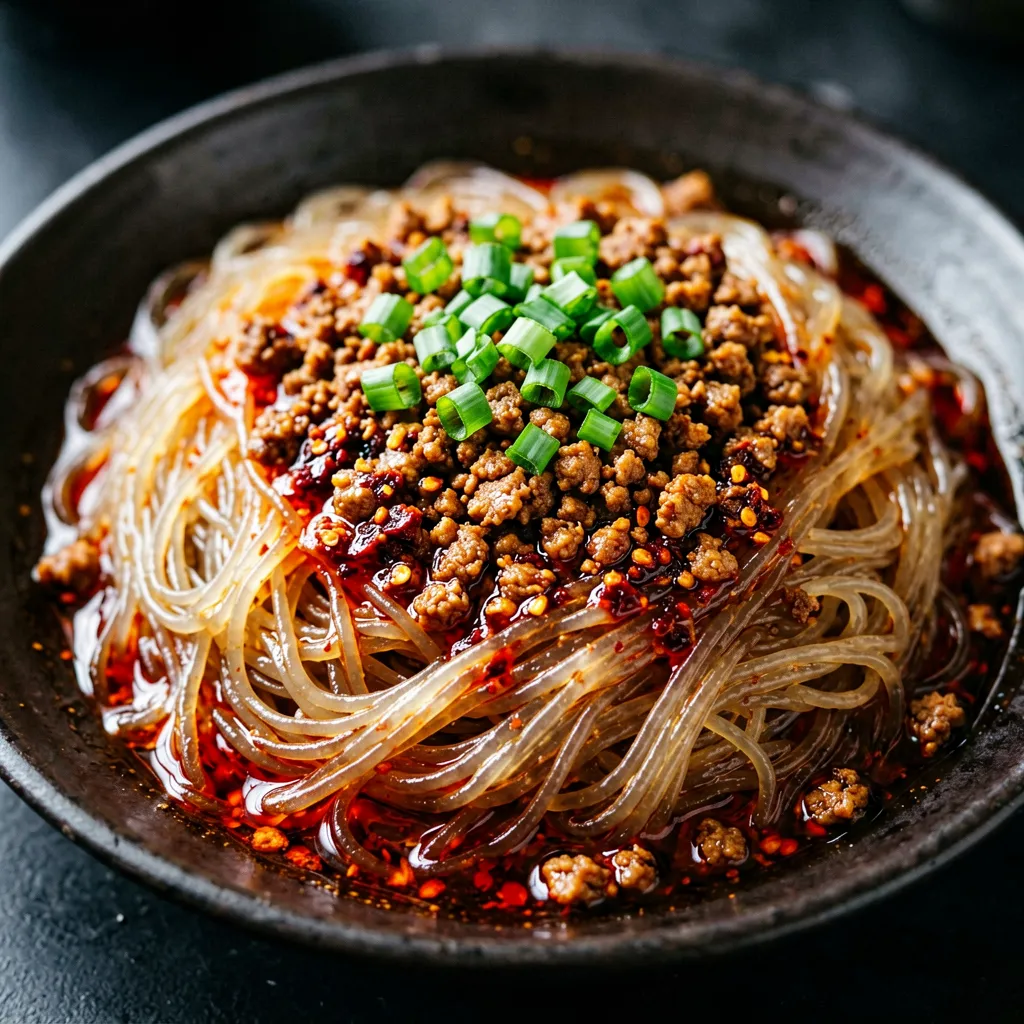
Ants Climbing a Tree
Ants Climbing a Tree is a classic Sichuan dish where glass noodles absorb the savory flavor of minced pork and spicy bean paste, creating a silky and hearty meal that's perfect over rice.
Ingredients
13 items- Dried glass noodles (mung bean vermicelli) 100g
- Ground pork 150g
- Scallions 3 stalks
- Ginger 1 small piece
- Garlic 3 cloves
- Pixian doubanjiang (fermented broad bean paste) 1 tablespoon
- Shaoxing wine 1 tablespoon
- Light soy sauce 1 tablespoon
- Dark soy sauce 1 teaspoon
- Sugar 1/2 teaspoon
- Salt To taste
- Sesame oil A few drops
- Vegetable oil 2 tablespoons
Nutrition
Steps (6 steps)
Place the dried glass noodles in a large bowl and cover with warm water (about 40°C). Let them soak for 15 minutes until soft and translucent. Drain well and cut into 10cm lengths with kitchen scissors. While soaking, finely chop the doubanjiang.
Prepare the ground pork in a bowl. Cut scallions into chopped sections, separating white and green parts. Peel and mince ginger and garlic.
Heat a wok or pan over medium heat and add 2 tablespoons vegetable oil. When the oil reaches about 150°C (slight ripples), add the ground pork. Quickly break apart with a spatula and stir-fry until the pork changes color and begins to release fat, about 2-3 minutes. Do not overcook; keep tender.
Reduce heat to low. Push the pork to the side and add the ginger, garlic, and chopped doubanjiang in the center. Stir gently to fry the paste until the oil turns red, about 1 minute. Be careful not to burn the paste. Then add 1 tablespoon Shaoxing wine, 1 tablespoon light soy sauce, 1 teaspoon dark soy sauce, and 1/2 teaspoon sugar. Stir everything together well.
Turn the heat to high and add the soaked noodles to the wok. Pour in about 100 ml of water or stock. Toss the noodles with the pork mixture. Once the liquid boils, reduce to medium heat, cover, and simmer for 3-4 minutes, occasionally lifting the noodles with chopsticks to prevent sticking. Cook until noodles become transparent and most of the liquid is absorbed; the sauce should look thick and glossy.
Remove the lid and increase heat to high to reduce any remaining liquid. Add the green scallion parts and quickly stir-fry for a few seconds. Taste and add a pinch of salt if needed (the doubanjiang is salty). Drizzle a few drops of sesame oil, toss briefly, then turn off the heat and transfer to a serving plate. Garnish with extra scallions if desired.
Tips
1. Use mung bean vermicelli for the best chewy texture. 2. Chop the doubanjiang finely to help release color and flavor. 3. Don't over-fry the pork; keep it tender. 4. Don't dry out the noodles completely; a little sauce keeps them moist. 5. Add dried chilies for extra heat if you like.
You May Also Like
More recipes you might enjoy
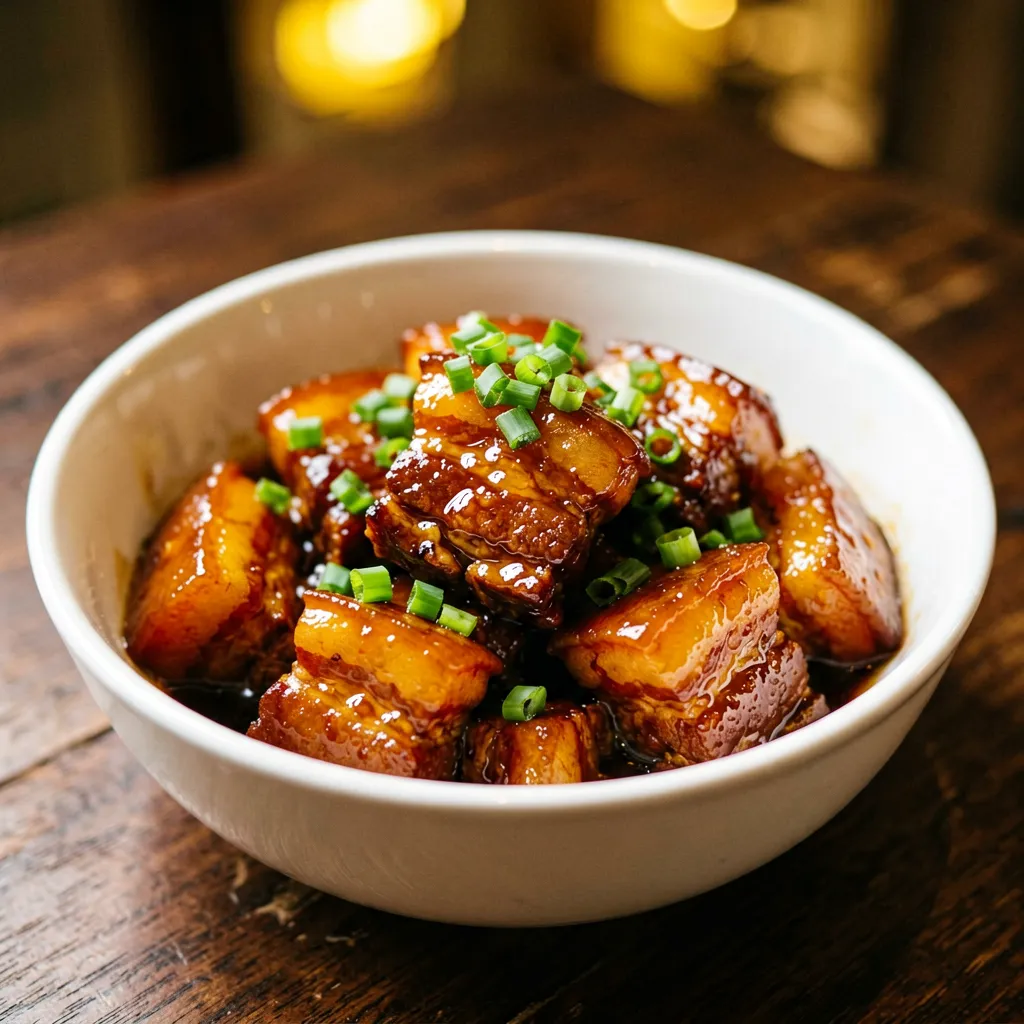
Hong Shao Rou (Red Braised Pork Belly)
Hong Shao Rou is a classic Chinese comfort food. Pork belly is slow-braised with caramelized sugar and soy sauce until meltingly tender. The meat turns a rich red color and is coated in a thick, savory-sweet glaze that pairs perfectly with steamed rice. It's a dish that warms the soul.

Mooncake
Mooncakes are essential traditional pastries for the Mid-Autumn Festival, with a thin, tender crust and rich, smooth filling. Making them at home adds warmth to the celebration; the golden crust, dense lotus seed paste, and savory egg yolk create an unforgettable taste.
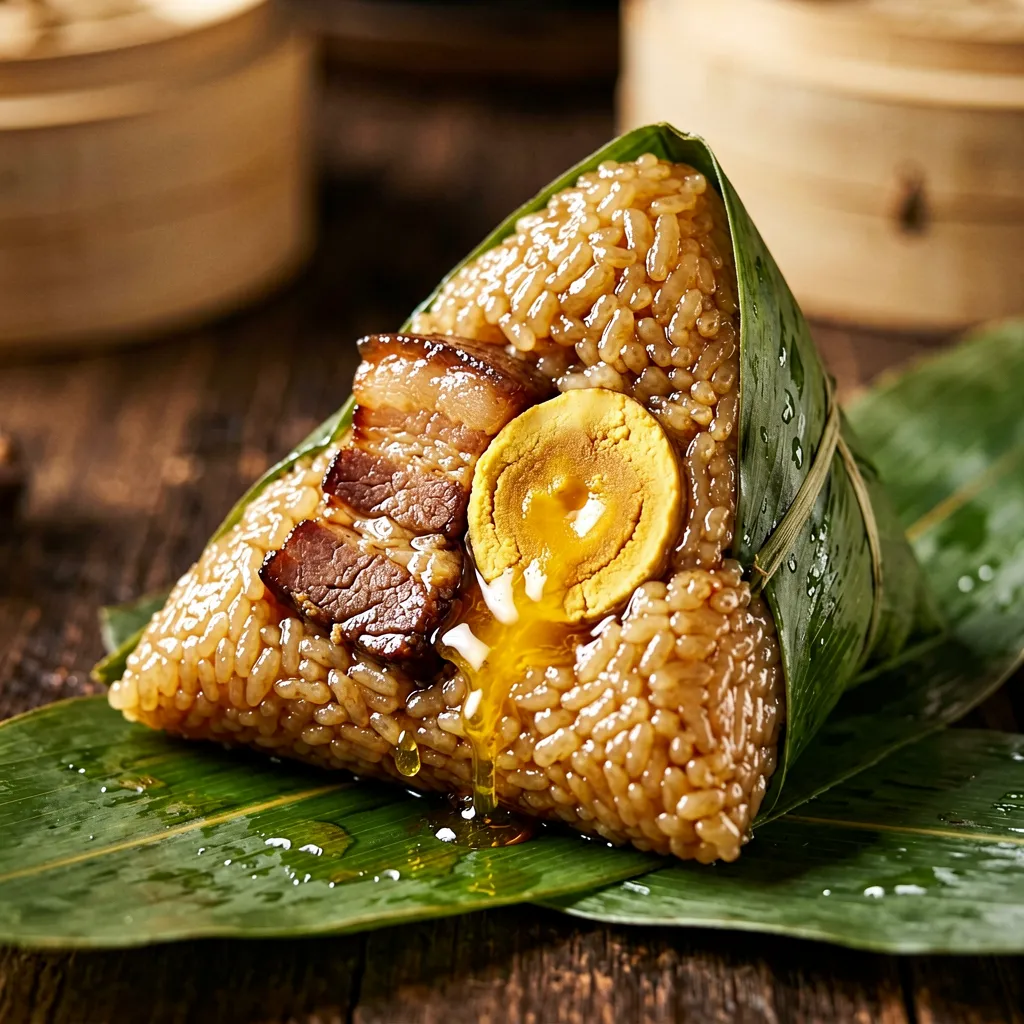
Zongzi (Sticky Rice Dumplings)
Traditional Chinese zongzi, sticky rice filled with marinated pork belly and salted duck egg yolks, boiled until tender and fragrant with bamboo leaf aroma. A must-have for Dragon Boat Festival, also a savory treat anytime.
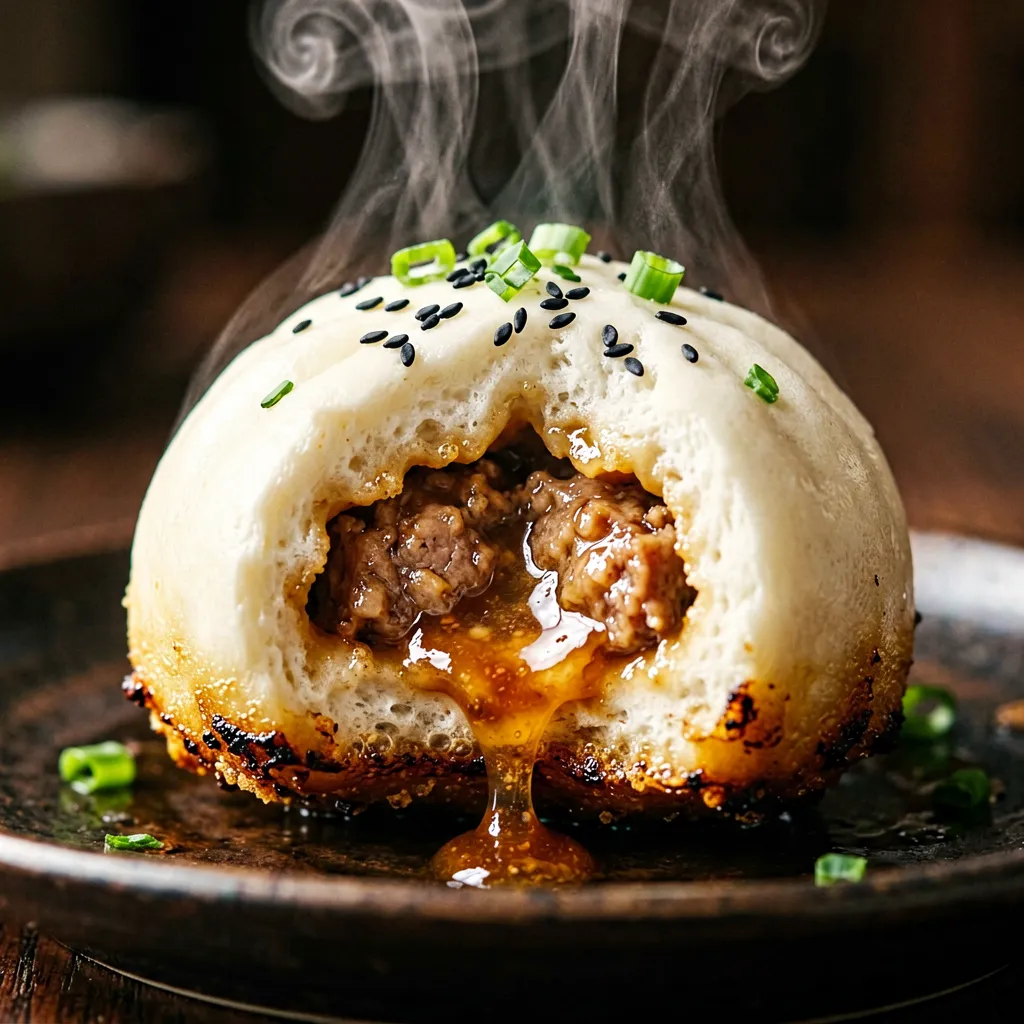
Pan-fried Pork Buns (Sheng Jian Bao)
Soft and fluffy top with a crispy golden bottom, these Shanghai-style pan-fried pork buns burst with savory juice when you bite into them. A beloved breakfast classic and street food favorite.