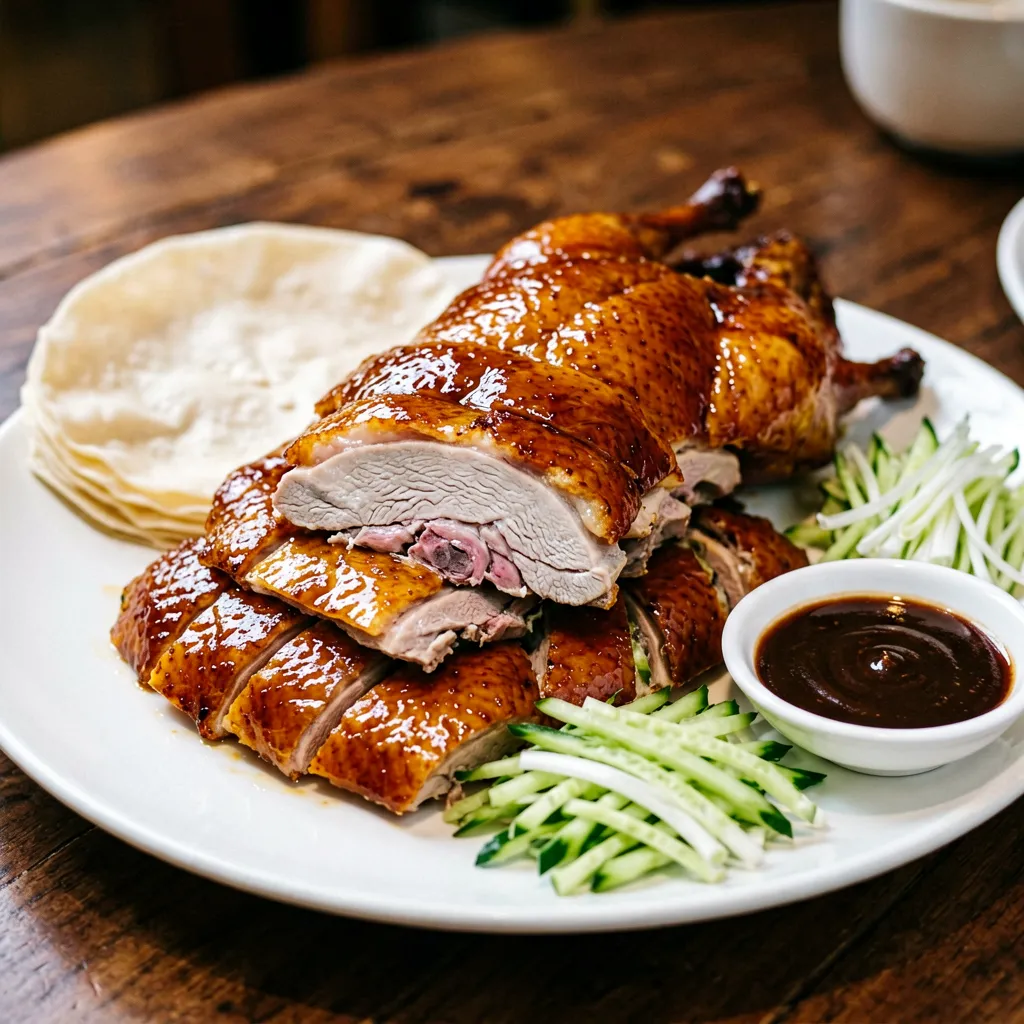
Peking Duck
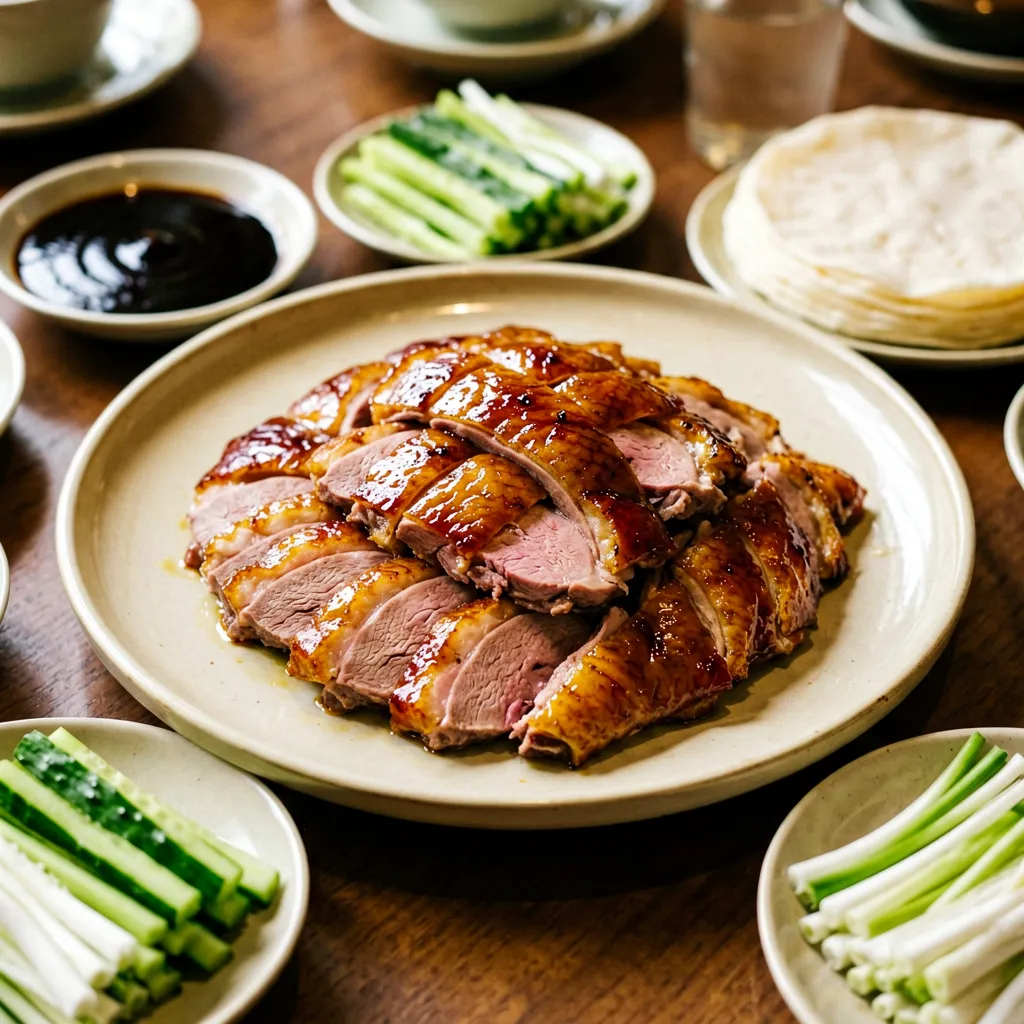
Glossy red, crispy skin and tender meat – the world-renowned Beijing delicacy. This multi-step roasted duck paired with pancakes, sweet bean sauce, and shredded scallions and cucumber offers an exquisite experience. The home-cooked version is also wonderful, allowing you to enjoy authentic flavor at home.
Ingredients
14 items- Whole duck 1 (about 2 kg)
- Salt 1/2 teaspoon
- Five-spice powder 1 teaspoon
- Sichuan peppercorns 1 teaspoon
- Star anise 2 pieces
- Ginger 1 piece (about 20g)
- Scallions 2 stalks
- Cooking wine 1 tablespoon
- Maltose 2 tablespoons
- Light soy sauce 1 tablespoon
- Cucumber 1
- Large scallions 2 stalks
- Sweet bean sauce 1/2 cup (about 100 ml)
- Mandarin pancakes 20 pieces
Nutrition
Steps (10 steps)
Thoroughly clean the duck, remove the tail and any remaining feathers, and pat dry inside and out with paper towels. Mix salt, five-spice powder, Sichuan peppercorns, and star anise together and rub all over the duck, massaging gently. Stuff ginger slices and scallion sections into the cavity, pour in cooking wine, cover with plastic wrap, and marinate in the refrigerator for at least 4 hours, preferably overnight, to fully infuse flavors.
Remove the marinated duck and rinse off the surface spices and salt (do not rinse the cavity). Bring a large pot of water to a boil. Using a ladle, repeatedly pour boiling water over the duck skin until the skin tightens and changes color. This step helps achieve crispy skin during roasting. After scalding, pat the duck thoroughly dry inside and out with paper towels.
Prepare the crisp-skin glaze: Combine maltose, light soy sauce, and 1 tablespoon hot water in a small bowl. Heat over hot water (bain-marie) and stir until maltose dissolves completely. Let the glaze cool slightly. Using a brush, coat the duck skin evenly, making sure to cover all areas. Let it dry for 30 minutes, then apply a second coat. Repeat 2-3 times to build a sugar film on the skin.
Hang the glazed duck by a hook or string through the wing ends in a well-ventilated area. Use an electric fan on low speed to dry the skin. You may apply an extra layer of glaze during drying. Allow the skin to air-dry for at least 4 hours until it feels like parchment paper. If short on time, a hair dryer on cool setting can speed up the process.
Preheat the oven to 180°C (356°F). Stuff the duck cavity with paper towels to absorb any liquid, and sew the opening shut with bamboo skewers or toothpicks to prevent juice leakage during roasting. Place the duck breast-side up on a wire rack over a baking tray lined with foil to catch drippings.
Roast the duck in the middle oven rack for 40 minutes. Check the color; if browning too quickly, cover loosely with foil. After 40 minutes, remove the duck from the oven, carefully turn it over (breast-side down), and continue roasting for another 30 minutes. Use tongs and be cautious of hot splatters.
Increase the oven temperature to 220°C (428°F). Turn the duck back to breast-side up, brush with any remaining glaze, and roast at the high heat for 10-15 minutes until the skin turns deep amber, begins to crackle, and fat renders out. You should smell a rich caramelized aroma.
Remove the roasted duck and let it rest for 10 minutes. Do not carve immediately; this allows the juices to redistribute. Using a sharp carving knife, first slice off the skin in whole pieces (starting from the breast), then slice the meat. Aim for each piece to have some skin and meat. Slice thinly with a swift motion.
Prepare accompaniments: Cut cucumber into thin matchsticks about 5 cm long. Similarly, julienne the white parts of the scallions. Spoon sweet bean sauce into small dishes. Steam the pancakes in a steamer over boiling water for 3-5 minutes until soft and pliable, then transfer to a plate.
To serve: Lay a pancake flat, place 2-3 slices of duck with skin on it, add some scallion and cucumber strips, and drizzle with sweet bean sauce. Roll up tightly and eat immediately while hot. The combination of crispy skin, tender meat, and fresh garnishes is simply irresistible.
Tips
1. The key to homemade Peking duck is thoroughly drying the skin before roasting; otherwise it won't turn crispy. 2. Maltose gives a brighter red color, but honey can be used as a substitute. 3. Always place a drip tray under the duck to keep the oven clean. 4. Use a very sharp knife to slice the duck; each slice should include both skin and meat for best texture and presentation. 5. The leftover duck bones can be used to make soup with cabbage and tofu – delicious.
You May Also Like
More recipes you might enjoy
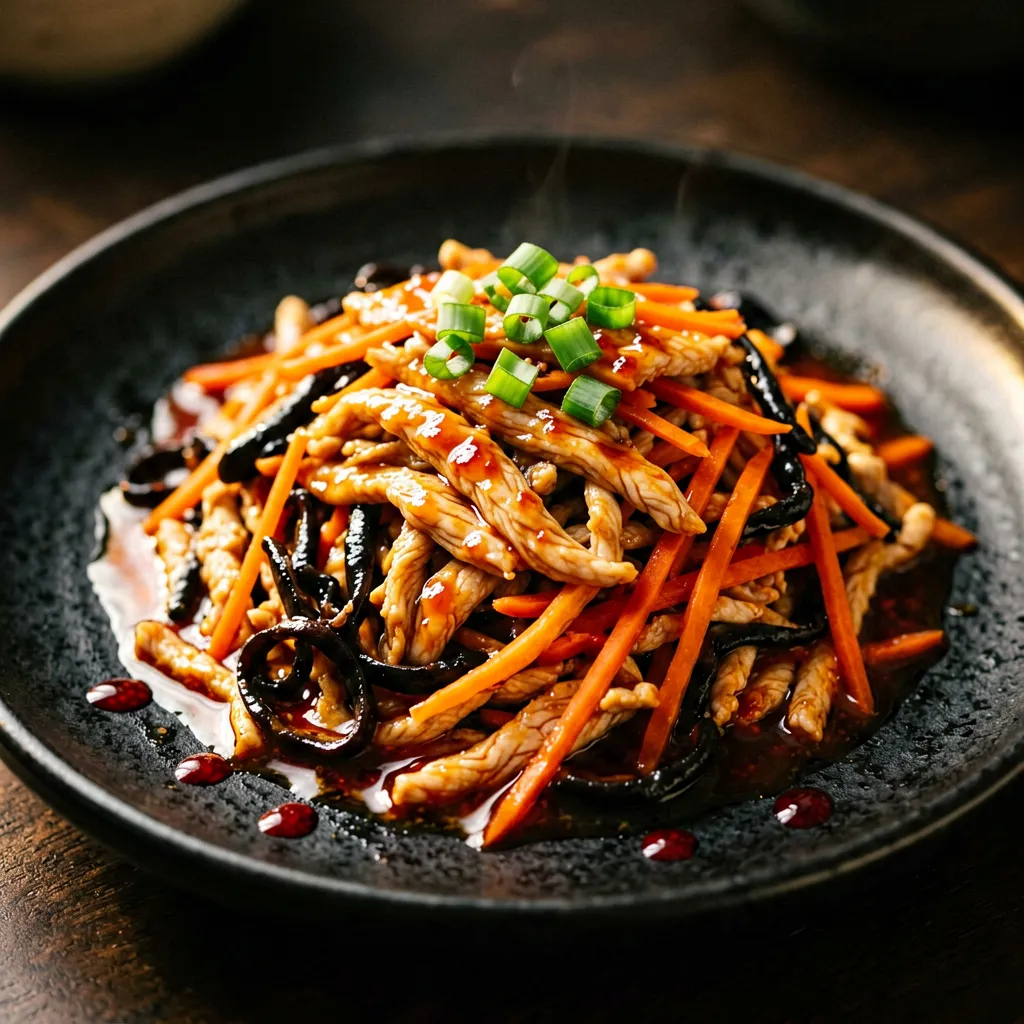
Yu Xiang Rou Si (Fish-Fragrant Shredded Pork)
A classic Sichuan dish featuring tender pork shreds in a tangy, sweet, and mildly spicy sauce with crunchy vegetables. The unique 'fish-fragrant' flavor comes from pickled chilies, ginger, garlic, and a perfect balance of sugar and vinegar—an irresistible comfort food that pairs wonderfully with steamed rice.
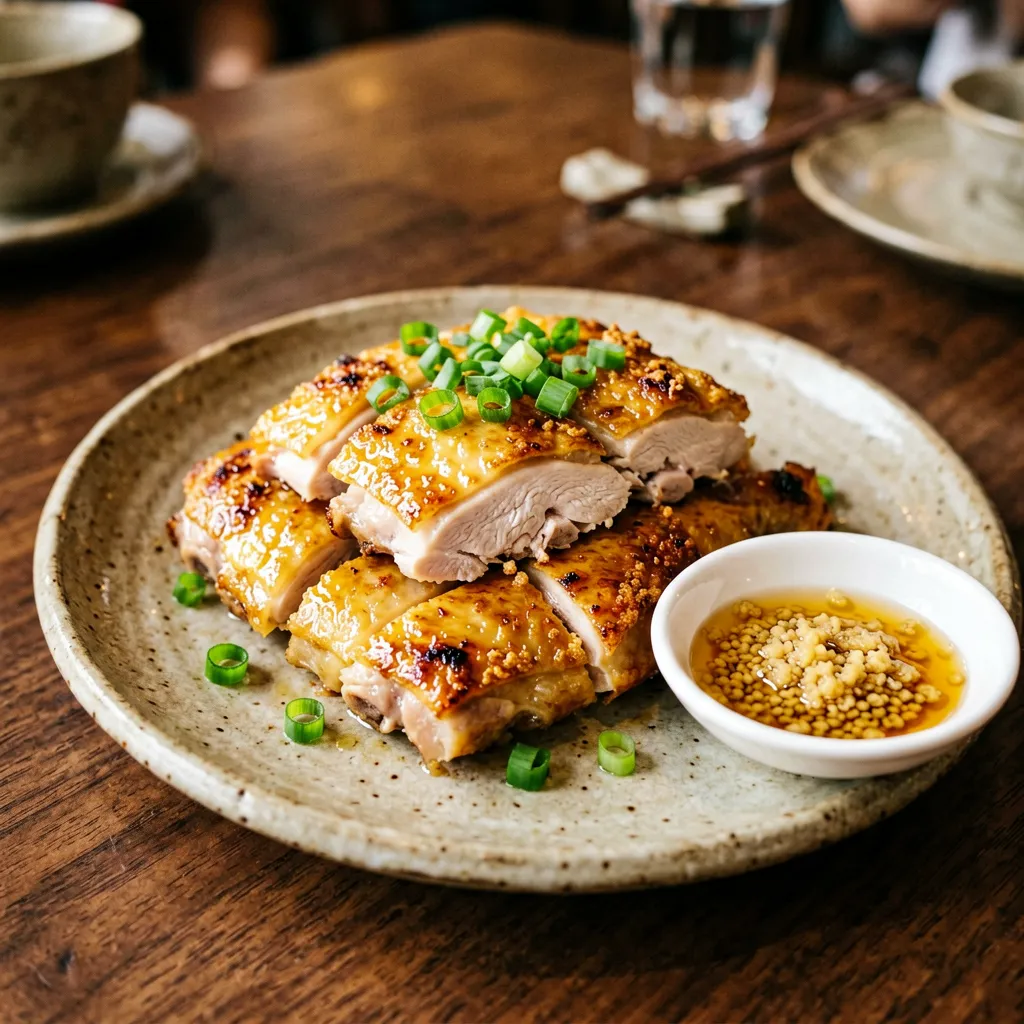
Salt-Baked Chicken (Yan Ju Ji)
A Hakka classic from Guangdong, this dish uses a crust of coarse salt to slowly cook the chicken, sealing in its natural juices. The result is golden, savory skin and incredibly tender, succulent meat, infused with the delicate aroma of sand ginger and salt. A must-try for festive dinners.
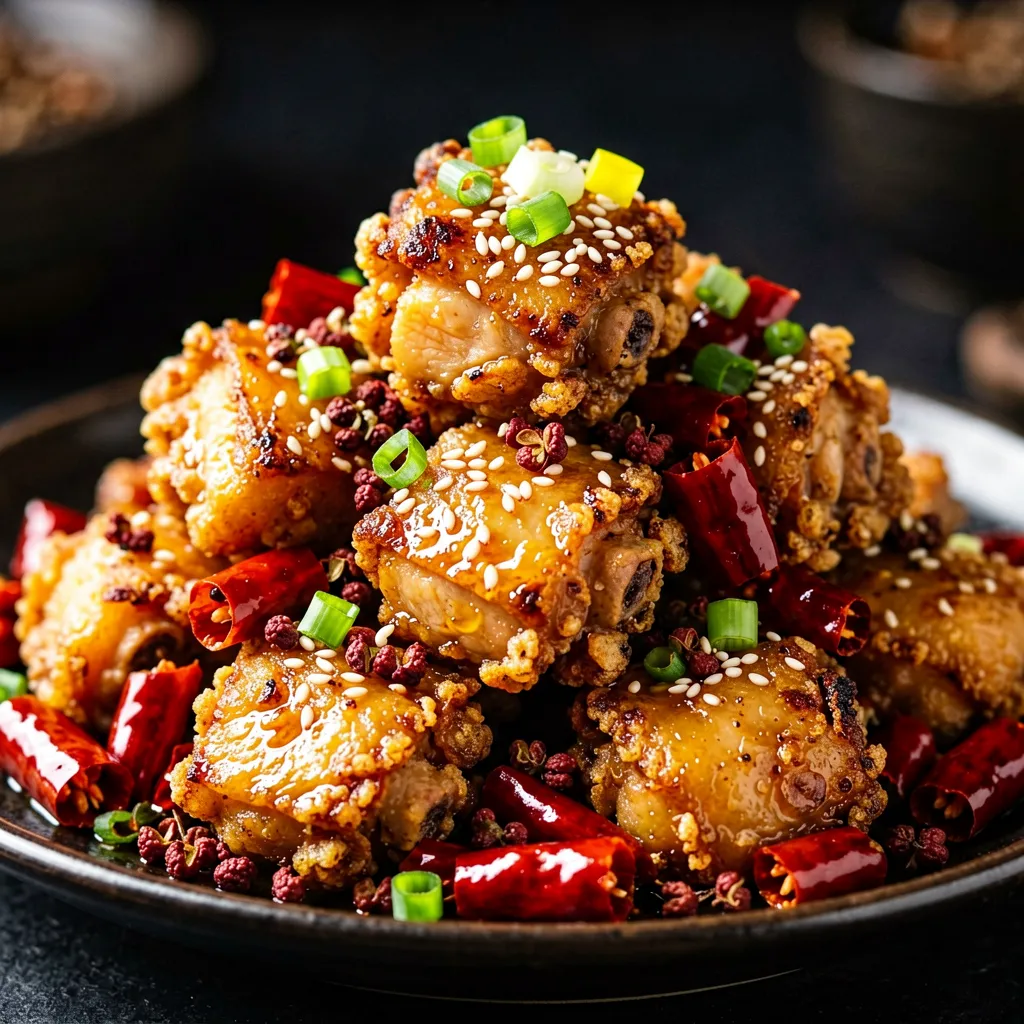
Chongqing Spicy Chicken (Laziji)
A classic Chongqing dish featuring crispy chicken pieces tossed with dried chilies and Sichuan peppercorns. The aromatic heat and numbing sensation are incredibly addictive. Perfect with steamed rice.
Peking Duck
A world-renowned classic of Beijing cuisine, featuring crispy skin and tender, juicy meat. Served with thin pancakes, sweet bean sauce, and scallion shreds, each bite is a perfect harmony of textures and flavors. Enjoy authentic Peking Duck at home!